Unlocking Your Financial Future: A Guide to Investment Strategies
Introduction: Navigating the Investment Landscape
Investing is a crucial step towards achieving your financial goals, whether it's retirement, buying a home in the vibrant Toronto real estate market, or simply growing your wealth. However, the investment landscape can seem complex and overwhelming. At Westwood Investments, we believe that understanding different investment strategies is the key to making informed decisions and building a successful portfolio tailored to your individual needs and risk tolerance. This guide will explore various investment strategies, empowering you to navigate the markets with confidence and clarity.
The strategies discussed here are intended for educational purposes and should not be considered financial advice. Always consult with a qualified financial advisor like those at Westwood Investments before making any investment decisions, especially considering the unique economic environment of Toronto and the broader Canadian market.
Active vs. Passive Investing: Choosing Your Approach
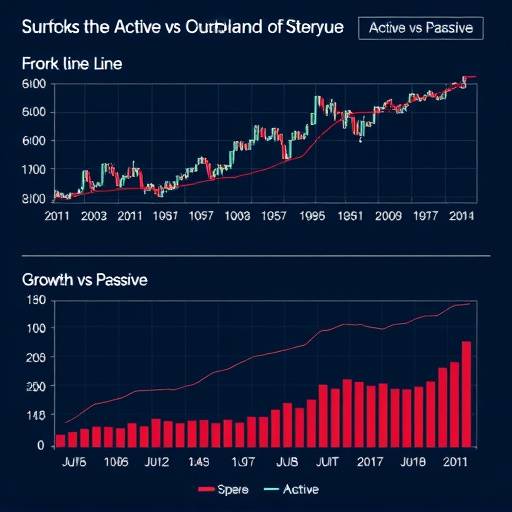
Active Investing
Active investing involves actively managing your portfolio with the goal of outperforming the market. This typically involves frequent trading, in-depth market research, and a strong understanding of economic indicators. Active investors often seek undervalued assets or capitalize on short-term market fluctuations. This strategy requires significant time, effort, and expertise.
Passive Investing
Passive investing, on the other hand, aims to match the market's performance rather than beat it. This is typically achieved through investing in index funds or Exchange-Traded Funds (ETFs) that track a specific market index, such as the S&P/TSX Composite Index. Passive investing generally involves lower fees and requires less active management.
The choice between active and passive investing depends on your investment goals, risk tolerance, and time commitment. Active investing has the potential for higher returns but also carries higher risks and costs. Passive investing offers a more diversified and cost-effective approach, providing steady, market-average returns. Westwood Investments can help you determine which approach aligns best with your individual circumstances.
Value Investing: Finding Undervalued Gems

Value investing is an investment strategy that involves identifying and investing in companies whose stock prices are trading below their intrinsic value. Value investors believe that the market often overreacts to short-term news and events, creating opportunities to buy undervalued assets. This strategy requires careful analysis of financial statements, industry trends, and economic conditions. Think of Benjamin Graham, one of the most influential figures in value investing, and his principles of focusing on the margin of safety.
In the Toronto context, value investors might look for established Canadian companies in sectors like energy or materials that are temporarily out of favor but possess strong fundamentals and growth potential. However, it's essential to perform comprehensive due diligence to ensure that the perceived undervaluation is not due to fundamental issues within the company.
Growth Investing: Capitalizing on High-Growth Potential

Growth investing focuses on investing in companies with high growth potential. These companies typically operate in rapidly expanding industries and are expected to generate significant revenue and earnings growth in the future. Growth investors are often willing to pay a premium for these companies, anticipating that their stock prices will appreciate significantly over time.
In the Canadian market, growth investors might target technology companies, innovative healthcare firms, or companies benefiting from the increasing urbanization of cities like Toronto. While growth investing offers the potential for high returns, it also carries higher risks, as growth companies can be more volatile and susceptible to market fluctuations. It is crucial to analyze revenue, earnings growth rate, and market share and prospects before investing.
Dividend Investing: Generating Income Streams

Dividend investing involves investing in companies that pay regular dividends to their shareholders. Dividends provide a steady stream of income, making this strategy particularly attractive for retirees or those seeking passive income. Dividend investors typically look for companies with a long history of paying consistent dividends and strong financial stability.
In Canada, dividend investors often target established companies in sectors like banking, telecommunications, and utilities, as these companies tend to generate consistent cash flows and distribute a significant portion of their earnings as dividends. It is, however, vital to look for the underlying fundamental strength of the company, its future earning possibilities, and its cash flow generation.
Risk Management: Protecting Your Investments

Risk management is an essential component of any investment strategy. It involves identifying, assessing, and mitigating potential risks that could negatively impact your portfolio. Diversification is a key risk management technique, involving spreading your investments across different asset classes, sectors, and geographic regions. This helps to reduce the impact of any single investment on your overall portfolio.
Other risk management strategies include setting stop-loss orders, using hedging instruments, and regularly rebalancing your portfolio to maintain your desired asset allocation. Your risk tolerance depends on your investment goals, time horizon, and financial situation. Westwood Investments can help you assess your risk tolerance and develop a risk management strategy tailored to your specific needs. Consider how factors such as inflation, interest rates, and geopolitical events might impact your investments and adjust your strategy accordingly.